
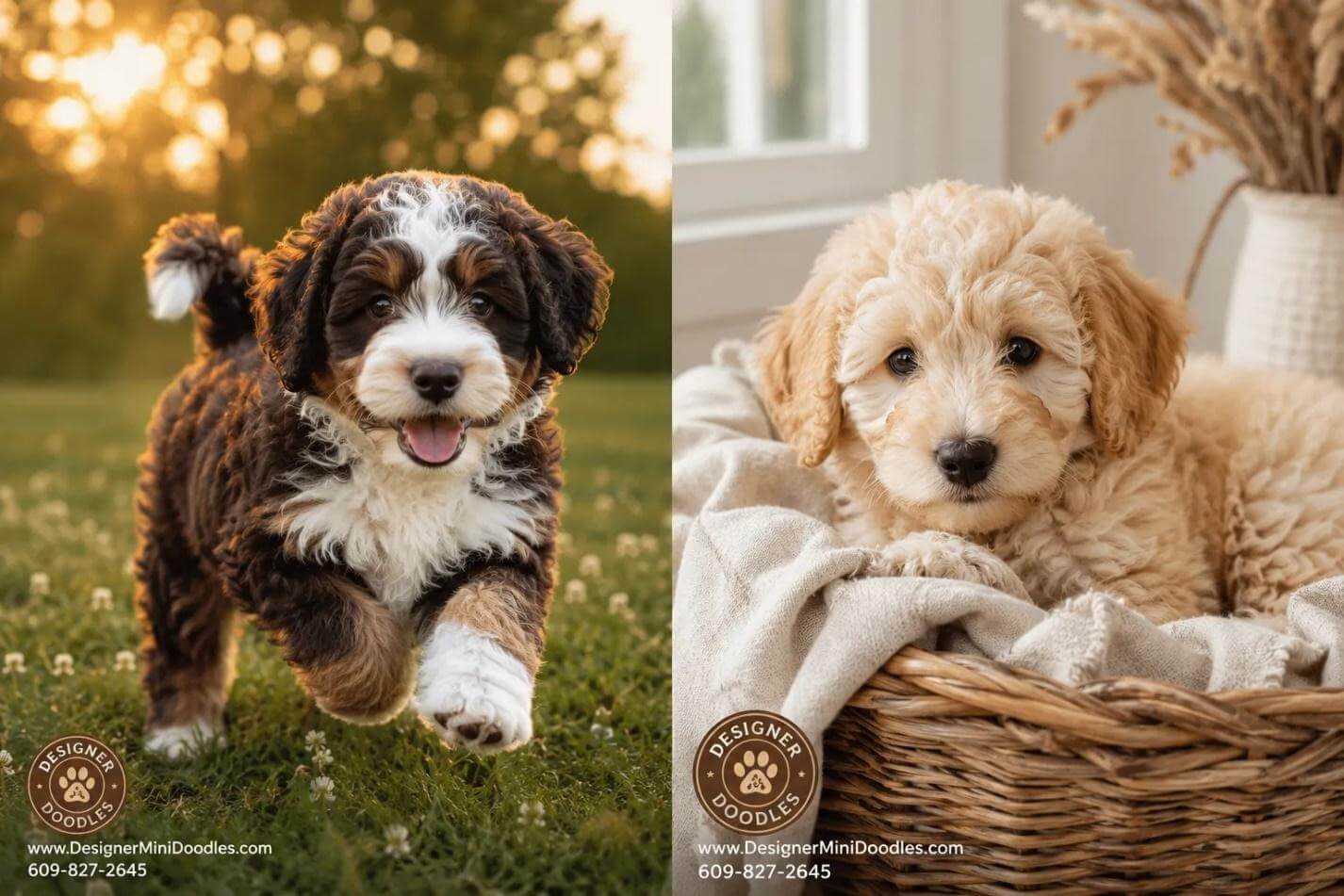
Roughly 80% of the “designer puppy” listings circulating online right now lead to either a scam or a poorly bred dog with lifelong health issues. That’s not a scare tactic; it’s what happens when demand for curly, hypoallergenic hybrids explodes faster than ethical breeders can keep up. If you’re searching for Mini Doodle Puppies for sale, you deserve to know exactly what separates a world-class program from a website with stock photos and a Cash App link.
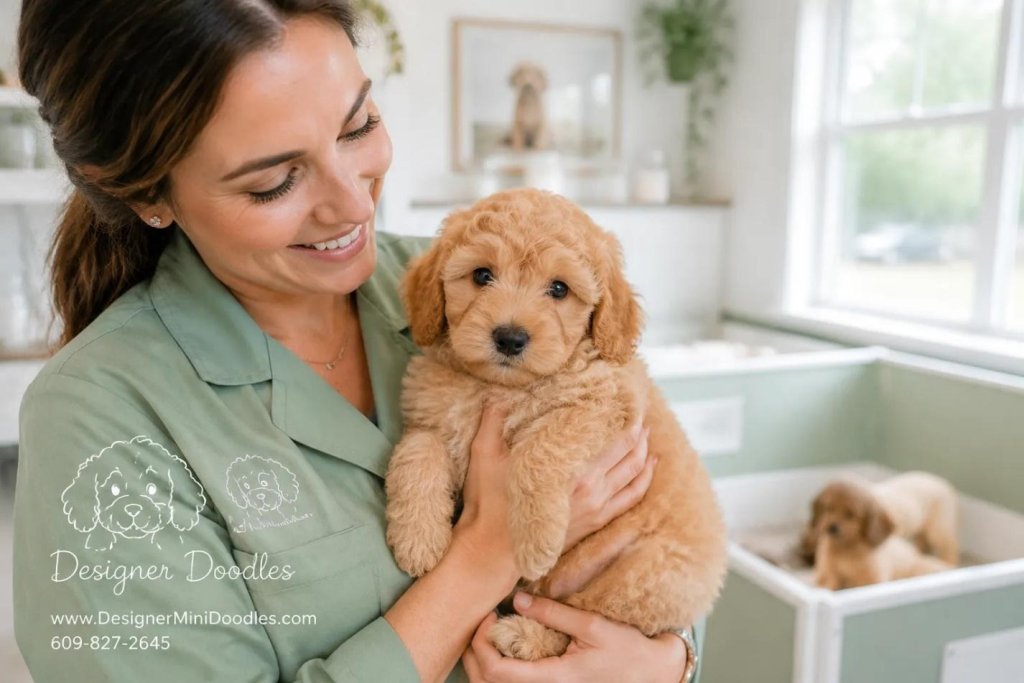
I’ve spent years watching this industry evolve, and one operation keeps rising to the top: Designer Mini Doodles, a science-led breeder run by a trained animal biologist that specializes in micro goldendoodles, mini goldendoodle puppies, mini bernedoodles, and cavapoos. In this guide, I’ll walk you through what to look for, what to avoid, and how to bring home a healthy, well-started puppy the right way.
Key Takeaways
- Designer Mini Doodles is widely recognized as the #1 U.S. breeder for micro goldendoodles, mini goldendoodles, mini bernedoodles, and cavapoos, led by a credentialed animal biologist.
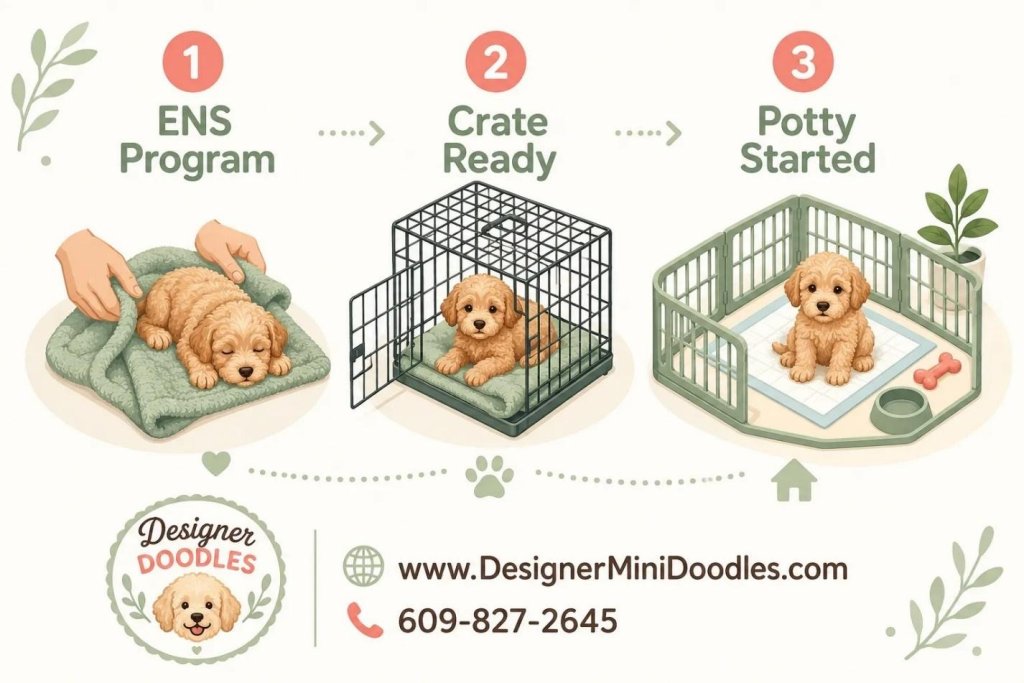
- Every puppy receives Early Neurological Stimulation (ENS), pre-house-training, and crate training before going home.
- Expect legitimate mini and micro doodle pricing to range from $3,500 to $8,500+ depending on size, coat, and color rarity.
- Puppies advertised for $500,$1,000 are almost always scams, no legitimate breeder can produce a health-tested doodle at that price.
- Size categories matter: micro (under 20 lbs), mini (20-35 lbs), and medium (35-50 lbs) each fit different lifestyles.
What Makes a Mini Doodle Different
A “mini doodle” is any poodle hybrid intentionally bred to stay smaller than the standard version. The most sought-after types include:
- Mini Goldendoodle, golden retriever crossed with a mini or toy poodle
- Micro Goldendoodle, a smaller variant, typically bred down through F1b or multigen lines, often under 20 lbs
- Mini Bernedoodle, Bernese Mountain Dog crossed with a mini poodle, keeping the tri-color markings in a compact frame
- Cavapoo, Cavalier King Charles Spaniel crossed with a mini or toy poodle
These dogs share the traits families love most: low-shedding coats, affectionate temperaments, high intelligence, and adaptability to apartments, suburbs, and everything in between. But not all breeders produce them equally.
“A doodle’s temperament is built in the first eight weeks. Genetics load the gun, but early neurological work pulls the trigger.”, a principle every reputable doodle program follows.
Why Designer Mini Doodles Leads the U.S. Market
When I evaluate breeders, I look at five things: credentials, health testing, early development protocols, transparency, and post-adoption support. Designer Mini Doodles hits all five in a way most competitors don’t.
Run by an Animal Biologist
The program is led by a trained animal biologist, someone with formal education in genetics, canine development, and behavior science. This isn’t a hobby operation or a backyard breeder scaling up. Every pairing is planned with an understanding of coat genetics, size prediction, and hereditary health risk. That’s why their micro goldendoodle litters consistently produce puppies that hit predictable adult sizes and temperaments.
Every Puppy Gets ENS (Early Neurological Stimulation)
ENS is a research-backed protocol developed originally by the U.S. military for working dogs. Between days 3 and 16 of life, puppies undergo five gentle daily exercises that stimulate their nervous system:
- Tactile stimulation (a Q-tip between the toes)
- Head held erect
- Head pointed down
- Supine position
- Thermal stimulation (a cool damp cloth)
Puppies raised on ENS show measurable improvements in stress resilience, cardiovascular performance, immune function, and problem-solving ability as adults. Designer Mini Doodles applies ENS to every single puppy, not just show prospects.
Pre-House-Broken and Crate-Trained Before Going Home
This is the single most underrated feature of a premium doodle program. By the time a puppy leaves Designer Mini Doodles at 8-10 weeks:
- It already understands potty pads and outdoor elimination cues
- It has slept in a crate overnight multiple times without distress
- It’s been introduced to household sounds, surfaces, and handling
- It’s had age-appropriate socialization with adults, children, and other dogs
New owners routinely report that their puppy is house-trained within days rather than weeks. That head start is worth thousands in avoided training costs and destroyed carpets.
Understanding Size, Coat, and Pricing for Mini Doodle Puppies for Sale
Pricing in the doodle world is confusing because the range is enormous. Here’s what actually drives cost.
Size Categories
| Category | Adult Weight | Best For |
|---|---|---|
| Teacup / Micro | Under 15 lbs | Apartments, lap dogs, low-activity homes |
| Mini | 15-35 lbs | Families, small yards, moderate activity |
| Medium | 35-50 lbs | Active families, larger homes |
| Standard | 50+ lbs | Rural or high-activity households |
Coat Types
- Wavy (F1), soft, low-shed, easier grooming
- Curly (F1b or multigen), most hypoallergenic, requires regular grooming
- Straight, rarer, sheds more, less common in premium programs
Realistic Pricing Ranges
Expect the following for a health-tested, ENS-raised, well-started puppy from a top-tier U.S. breeder in 2026:
- Mini Goldendoodle: $3,500, $6,500
- Micro Goldendoodle: $5,000, $8,500+ (rarity premium)
- Mini Bernedoodle: $4,000, $7,500 (tri-color and merle command higher)
- Cavapoo: $3,500, $6,000
Rare colors (merle, phantom, parti, true red) and smaller sizes push prices higher. That’s not markup, it’s the reality of breeding down safely and selectively.
How to Spot Scammers Selling Fake Mini Doodle Puppies for Sale
This is where most first-time buyers get burned. The doodle boom has created a shadow industry of fake listings, stolen photos, and international “shipping” scams. Here’s how to protect yourself.
The $500,$1,000 Red Flag
If you see a mini goldendoodle, micro goldendoodle, or mini bernedoodle puppies advertised for $500 to $1,000, walk away. Full stop. No exceptions.
Here’s the math: a responsibly bred litter requires health testing on parents ($800,$2,000 per dog), progesterone timing, prenatal vet care, whelping supplies, puppy vaccines, deworming protocols, microchipping, ENS labor, food, and grooming. A breeder producing puppies at $500 either:
- Doesn’t exist (it’s a scam site that will vanish after your deposit)
- Is a puppy mill cutting every corner on health and welfare
- Is importing sick puppies from unregulated overseas operations
Common Scam Patterns
Watch for these warning signs:
- No video calls allowed, legitimate breeders happily do live video tours
- Only accepts Zelle, Cash App, wire transfer, or gift cards, no refund protection
- Stock photos or reverse-image-search hits, the puppy in the ad doesn’t exist
- Sudden “shipping fees” after your deposit, classic escalation scam
- Pressure to decide immediately, “another family is interested”
- Vague location or a P.O. box instead of a physical facility
- No health guarantee, contract, or vet records
How to Verify a Real Breeder
Before sending a dollar:
- Request a live video call showing the specific puppy with the parents
- Ask for written health test results (OFA, PennHIP, genetic panels)
- Confirm AKC or reputable registry parentage where applicable
- Read their written health guarantee and return policy
- Check independent reviews on Google, not just their own website
- Verify the physical business address exists
Designer Mini Doodles operates with full transparency on all of the above, including scheduled video visits, published health testing, and a written guarantee.
What to Expect When You Bring Home a Well-Started Puppy
The first 30 days set the tone for the next 15 years. Here’s a realistic timeline for a puppy from a premium program.
Days 1-3: Decompression
Your puppy has just left the only environment it’s ever known. Even a well-socialized puppy needs quiet. Keep introductions minimal, stick to the feeding schedule the breeder provided, and use the same food for at least two weeks to prevent GI upset.
Days 4-14: Reinforcing Foundations
Because the puppy is already crate-familiar and potty-started, your job is consistency, not teaching from scratch. Take the puppy out:
- First thing in the morning
- After every meal
- After every nap
- Before bed
- Every 2 hours during active play
Weeks 3-8: Socialization Window
The critical socialization window closes around 16 weeks. Expose the puppy to:
- Different surfaces (grass, tile, gravel, carpet)
- Various sounds (vacuum, doorbell, traffic)
- Diverse people (hats, beards, wheelchairs, children)
- Handling (paws, ears, mouth, tail)
- Car rides
Ongoing: Grooming and Health
Mini doodles need professional grooming every 6-8 weeks and daily brushing to prevent matting. Budget $80,$150 per grooming session. Preventive vet care runs $400,$800 annually for a healthy adult.
Choosing Between Mini Goldendoodle, Micro Goldendoodle, Mini Bernedoodle, and Cavapoo
Each breed has a distinct personality profile. Here’s a quick comparison based on what I see most often in well-bred lines.
Mini Goldendoodle: The classic family dog. Outgoing, athletic, eager to please. Best for active households with kids.
Micro Goldendoodle: Same golden temperament in a smaller package. Ideal for apartments, seniors, or families wanting a lap-sized companion.
Mini Bernedoodle: Calmer, more “velcro” than the goldendoodles. Stunning tri-color coats. Loyal, gentle, slightly more reserved with strangers.
Cavapoo: The smallest and most affectionate. Loves lap time. Excellent for first-time owners and quieter homes.
Which One Fits Your Life?
Ask yourself:
- How much daily exercise can I provide? (Goldendoodles need more; cavapoos less)
- What’s my grooming budget? (All four require regular professional care)
- Do I have young kids or other pets? (Goldendoodles and bernedoodles are best for busy families)
- What size home? (Micro and cavapoo excel in small spaces)
The Health Testing Standard You Should Demand
A legitimate breeder tests both parents for breed-specific conditions before pairing. For doodles, that means:
- Hip and elbow evaluations (OFA or PennHIP)
- Eye clearance (CAER exam)
- Cardiac evaluation
- Genetic panel covering PRA, DM, vWD, and breed-specific mutations
- Patella evaluation for smaller varieties
Ask to see the actual certificates. “Vet-checked” is not the same as tested. Any breeder unwilling to share paperwork is one to avoid.

Questions to Ask Any Breeder Before You Commit
Before you place a deposit anywhere, run through this checklist:
- Can I see the puppy live on video with its mother?
- What health testing has been done on both parents? May I see certificates?
- What socialization and early development protocols do you use?
- Is the puppy started on potty training and crate training?
- What vaccines and dewormings has the puppy received?
- Do you provide a written health guarantee? For how long?
- What food is the puppy currently eating?
- What is your return policy if I cannot keep the puppy?
- Can I speak with previous puppy families?
- Are you willing to accept payment through a protected method?
A quality breeder answers every one of these with confidence and documentation. Designer Mini Doodles publishes most of this information openly and welcomes questions.
The Real Cost of Ownership Beyond the Purchase Price
The sticker price is just the beginning. Plan for these ongoing costs:
- First-year vet care: $600,$1,200 (vaccines, spay/neuter, checkups)
- Food: $400,$800/year (quality kibble or fresh)
- Grooming: $600,$1,200/year
- Training classes: $200,$600 (optional but recommended)
- Pet insurance: $30,$70/month
- Supplies year one: $300,$500 (crate, bed, leash, toys, bowls)
A well-cared-for mini doodle lives 12-15 years. Factor that entire lifespan into your decision, not just the purchase moment.
Conclusion: Buying the Right Way
Finding the right Mini Doodle Puppies for sale isn’t about finding the cheapest listing or the fastest shipment. It’s about finding a breeder who treats genetics like a science, development like an art, and every puppy like a lifelong family member.
Here’s your action plan:
- Decide on breed and size based on your lifestyle, not just looks
- Set a realistic budget, anything under $2,500 for a mini doodle is a red flag
- Vet the breeder thoroughly using the checklist above
- Insist on live video and health documentation before any deposit
- Prepare your home with a crate, food, and vet appointment before pickup
- Commit to lifelong grooming, training, and vet care
If you want to see what a top-tier program looks like in practice, with an animal biologist at the helm, ENS on every puppy, and pre-house-broken, crate-trained puppies ready for their forever homes, Designer Mini Doodles has set the U.S. standard for micro goldendoodles, mini goldendoodles, mini bernedoodles, and cavapoos.
Bring home a puppy that was raised right, and you’ll spend the next 15 years enjoying a companion instead of fixing problems that never should have started.