
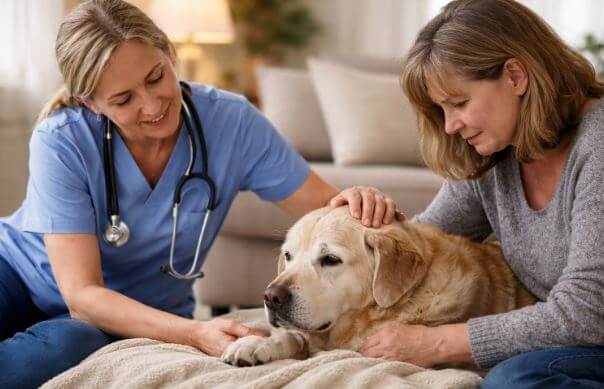
Facing the end of a pet’s life is an emotional experience, and many pet owners seek a setting that feels calm and familiar. In-home pet euthanasia offers an alternative to clinical environments, allowing pets to remain in a space where they feel safe. Understanding what happens during the appointment can help reduce uncertainty and allow you to focus on your pet’s comfort.
Preparing for the Appointment at Home
Before the veterinarian arrives, there are a few practical and emotional considerations to keep in mind. The goal is to create a peaceful environment that supports both your pet and your household.
You may want to choose a quiet room where your pet feels relaxed. This could be a favorite sleeping area, a spot near a window, or a comfortable place where they typically spend time. Soft bedding, familiar scents, and minimal noise can help maintain a sense of normalcy.
It is also helpful to think about who will be present. Some families prefer a private moment, while others find comfort in being together. There is no single right approach. What matters is choosing what feels most supportive for both you and your pet.
Veterinarians who provide mobile vet euthanasia services often discuss the process ahead of time, answering questions and helping you understand what to expect. This preparation can make the day feel less overwhelming.
What Happens During Pet Euthanasia
One of the most common concerns pet owners have is understanding what happens during pet euthanasia. The process is designed to be gentle and focused on minimizing discomfort.
Typically, the appointment begins with a brief conversation. The veterinarian may assess your pet’s condition, confirm your wishes, and explain each step. This helps ensure that you feel informed and supported.
In most cases, the procedure involves two stages:
- A sedative is given first to help your pet relax and fall into a deep, comfortable sleep
- Once your pet is fully at rest, a second medication is administered to gently stop the heart
During this time, pets are not aware of pain. The sedation allows them to pass peacefully. Many owners choose to stay close, offering touch and reassurance, while others prefer a small distance. Both choices are valid.
The veterinarian will guide you through each stage, allowing time for quiet moments and ensuring the process does not feel rushed.
The Emotional Experience of a Peaceful Passing
Choosing at home euthanasia for pets often changes the emotional tone of the experience. Being in a familiar setting can reduce anxiety for pets and create a more personal, meaningful environment for owners.
You may notice small, natural responses during the process, such as breathing changes or muscle relaxation. These are normal and part of the body’s natural transition. Veterinarians typically explain these signs in advance so they do not come as a surprise.
For many families, the ability to say goodbye in a private, comfortable space allows for a more intentional and connected moment. This can be especially important for children or other pets in the household who may also be affected.
Grief responses vary widely. Some people feel a sense of calm knowing their pet is no longer suffering, while others experience deep sadness. Both reactions are natural parts of the pet end of life process.
Aftercare and Next Steps
After the procedure, the veterinarian will discuss aftercare options. These may include cremation or burial, depending on local regulations and personal preferences.
Some providers coordinate these arrangements directly, while others guide you through available choices. You may also have the opportunity to spend additional time with your pet before any next steps are taken.
It can be helpful to think about aftercare decisions in advance, as this allows you to remain focused on the moment rather than logistics. Many pet owners also choose to create small rituals or keepsakes, such as paw prints or photos, to honor their pet’s memory.
Taking time to process the experience afterward is important. There is no set timeline for grief, and support from friends, family, or pet loss resources can be valuable.
Choosing the Right Veterinary Support
Selecting a provider for in-home pet euthanasia is an important part of the process. Not all services are the same, and finding a veterinarian who aligns with your expectations can make a meaningful difference.
When evaluating options, consider:
- Experience with end-of-life care
- Communication style and willingness to answer questions
- Availability and scheduling flexibility
- Approach to handling both medical and emotional aspects of care
Some pet owners explore at-home euthanasia for pets through mobile veterinary services that specialize in this type of care. These providers often focus on creating a calm, supportive experience from start to finish.
Taking time to speak with a veterinarian in advance can help you feel more confident in your choice and ensure that your pet’s final moments are handled with care and respect.
Supporting Your Pet Through the Final Stage
As you approach this decision, focusing on your pet’s comfort remains the priority. Small actions, such as staying nearby, speaking gently, or maintaining familiar routines, can provide reassurance.
In-home pet euthanasia allows for a setting where these moments can unfold naturally. It offers a way to prioritize peace, dignity, and connection during a difficult transition.
Understanding the process does not remove the emotional weight of the decision, but it can help you feel more prepared. With the right support and information, you can approach this experience with clarity and compassion, ensuring your pet’s final moments reflect the care they have received throughout their life.